Imanol Harinordoquy & Zee Ngwenya tries for Biarritz vs Saracens

"He often bores me intellectually. While I love Fellini, he loves The Transporter movies."


Dear Prudence,
My husband and I are in our 30s, have been married for more than a decade, and have one child. My husband is smart and successful. He's fun-loving, outgoing, supportive of my career, incredibly helpful around the house, generous, enjoys taking me shopping, and is generally an all-out nice guy. However, he often bores me intellectually. While I love Fellini, he loves The Transporter movies. I read for pleasure, he watches TV shows or works out. It depresses me. I have discussed this issue with him, and he does try to talk to me about things he thinks will interest me, such as history, but it doesn’t work due to his shallow grasp of most subjects. His mother left when he was in kindergarten and he got a horrible stepmother, so he was wounded emotionally. I find brains and confidence wild turn-ons, but unfortunately I don't get that with him. My husband does have magnificent prowess in bed and a great sense of humor. I always had boyfriends who were well-read and my dad was a keen intellect, so I love to discuss physics or geopolitics over dinner. But with my husband all I get is mundane talk. I feel trapped. What should I do?

—Confused

Dear Confused,
Every married woman can sympathize with your plight. Your husband overcame a terrible childhood to become an attentive, kind, helpful, loving, successful, funny man. Also, he’s a dynamo in bed. But he knows nothing about neutrinos or the Maastricht Treaty. Of course you want to trade him in! You say because your husband likes The Transporter while you’d rather watch La Dolce Vita, you feel trapped and depressed. But if you think transporting yourself to the dating scene will lead to your own “sweet life,” then you’re not quite the brain you think you are. The job of your spouse is not to provide you a romance-novel version of life. You and your husband connect in so many ways, but he’s not intellectually inclined. So fulfill that part of your life by joining a club or a group devoted to issues that intrigue you. And when you’re having stimulating talks with men at your foreign affairs club, don’t have an affair. I bet had you been married to an egghead for more than a decade, you’d be fantasizing about a guy who’s just a genius in the sack. If you can’t rethink your attitude and come to appreciate what you have, and instead decide to blow up your family to pursue your fantasies, be comforted knowing a man like your husband won’t be single for long.

—Prudie

Barcelona - Please Don't Go (Greg Cooke Remix) |FREE|

Swimming with the sharks

Armin Van Buuren Feat. Adam Young - Youtopia

John Mayer - Dreams (02.04.2010) Sunrise

ATB feat. Kate Louise Smith - Where you are

Chivas Regal Presents: Here's to Big Bear

"Sufrir asi no hace otra cosa que probarle al mundo que aun sos hombre. Ese dolor es parte de ser humano ..el hecho que puedas sentirlo es tu mayor fortaleza" Professor Albus Percival Wulfric Brian Dumbledore [1881-1997] Harry Potter y la Orden del Fénix

Paula Fernandes - Costumes

Sade - 18. Pearls - Full Paris Live Concert HD at Bercy (17 May 2011)

iConcerts - David Guetta - Sexy Bitch (live)

Chris Lake - Sundown (Ultra Records) OFFICIAL VIDEO

‎"Hay ladrones a los que no se castiga aunque roban lo más preciado: el tiempo" Napoleón I Bonaparte (1769 – 1821)

NASA rover takes space exploration to the next level

Duran Duran Come Undone Live From London

Pixar - Tennis Commercial

‎"If God had a face What would it look like?
Just a slob like one of us
Just a stranger on the bus
God is great" Alanis Morissette [1974]- What If God Was One

The Rolling Stones. Satisfaction

Candice Swanepoel ~ Sauvage Swimwear 2011

"Las pruebas se hacen solo con gaseosas" #frasesdelanoche

Magazine: 'Life's a Happy Song' - nytimes.com/video

Sevens: Around the World - Surf's up!

The Clash - Rock the Casbah (Bossa Cover)

"Cuando nos transformamos , nuestros amigos, los que no se han transformado, se convierten en los fantasmas de nuestro propio pasado; su voz resuena en nuestros oídos como si viniera de la región de las sombras, como si nos oyésemos a nosotros mismos, más jóvenes, más duros , menos maduros." Friedrich Wilhelm Nietzsche [1844-1900] II, § 242

Odyssey - Native New Yorker (1977)

Odyssey - Native New Yorker HQ

Neil Pierce feat. Adeola Shyllon - Love Therapy(Mark Stone & Terry Lex Mix)

"La mente no es un libro y no podra ser abierta ni examinada. Es compleja y multidimensional ,por eso , nuestras ideas no podran ser desmenuzadas para ser comprendidas por los demas". Severus Snape ( 1960 - 1998) Casa Slytherin , [Harry Potter y la Orden del Fenix]

Rameses B - Memoirs (Macca Remix) [Clip]

Keb Mo You Can Love Yourself HD

Sherbet - Howzat

Etiqueta en la era de las redes sociales


63% de la gente piensa que el telefono celular
en la mesa a la hora de comer es de mala educacion

63% dice que "postear" fotos de la gente de la oficina sin consultar esta mal

Solo 15% dice que "Postear" fotos de familiares sin consultar esta bien

TVR - Entrevistas Registradas 19-11-11

Chase Credit Card Sapphire TV Commercial

ç

5 lecciones que el rugby me enseñó acerca de la paternidad


El depoorte del rugby tiene sus raíces en el fútbol.
De acuerdo con la leyenda, en 1823, durante un partido un joven colegial inglés tomó una pelota de fútbol  y se decidió a correr hacia adelante con ella hacia la meta de los oponentes antes de ser tackleado. Actualmente este deporte se practica en aproximadamente 100 países y organiza una copa del mundo cada cuatro años con los 20 equipos más importantes del mundo. El rugby es un deporte de contacto jugador con mínimos elementos protectivos y requiere un alto nivel de estado físico. Realmente es el deporte de los hombres 
Comencé a jugar rugby cuando faltaban pocos meses para que naciera mi primer hijo. Tenía dos ojos negros en su Bautismo, pero era el hombre más orgulloso del planeta. Siempre me sentí orgulloso de ser un hombre bien hombre, pero a medida que crecía mi hijo tuve que aprender a ser padre de un hombre. No hay nada que cause un crecimiento más rápido en el hombre que cuando tiene un bebe.
A medida que crecía en destrezas para usar en una cancha de rugby, aprendí cinco importantes lecciones que me ayudaron a madurar como padre.
 

1. Todo equipo necesita tener un Capitán

Como en la mayoría de los deportes, los equipos de rugby tienen un capitán. Él canta las jugadas. Él habla con el referee. Lo más importante, él conduce a su equipo a la victoria.
Todo chico necesita que su padre sea el capitán de su equipo. Tus hijos buscan orientación. Necesitan que alguien establezca los estándares acerca de cómo actuar y reaccionar ante los obstáculos que enfrentarán. En algún lado alguien tuvo la idea de que lo mejor sería que nosotros fuésemos los mejores amigos de nuestros chicos. No es una falla de nuestros pequeños el querer hacerse amigos; lo que nuestros hijos necesitan de nosotros es que seamos un líder. Cuando los padres no asumen el rol de un líder proactivo en las vidas de sus hijos, ellos seguirán el comportamiento negativo que ha mostrado su padre.

2. El trabajo en equipo es vital

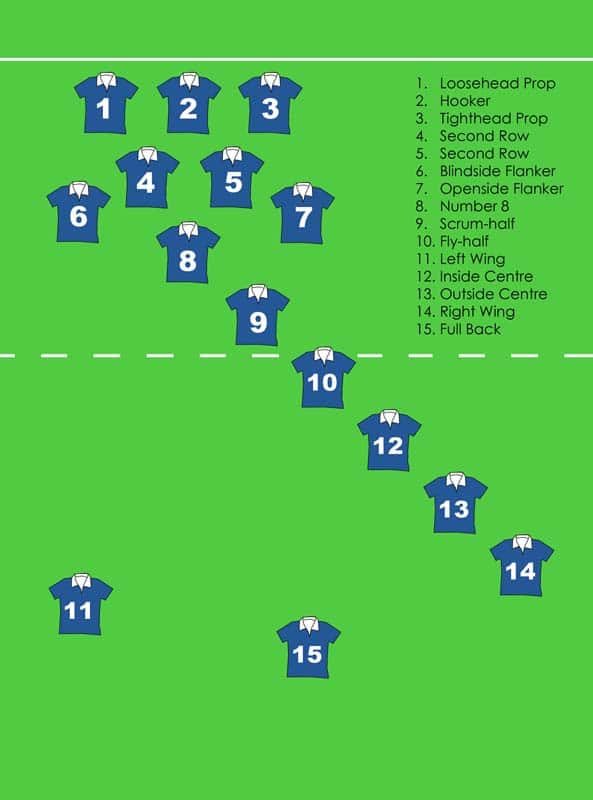
Rugby es, literalmente, el más completo deporte de equipos que haya existido siempre. Requiere de quince jugadores para anotar puntos y cada uno necesita saber cómo se juega en las otros catorce puestos del equipo. 
Como padres, necesitamos crear un equipo con nuestros hijos. No para ser confundidos como que somos sus mejores amigos, formar un equipo con tus hijos significa ser su compañía a medida que van navegando las dificultades de la vida. No podemos resolverles todos sus problemas, como el de ganar en sus juegos y el de explicarles las complejidades del sexo opuesto, pero podemos estar al lado de ellos en cada uno y todos esos eventos. Es tarea del padre ejercer liderazgo y compañerismo, escuchar las frustraciones y sufrimiento de sus hijos así como también señalarles la luz que está al final del túnel.

3. La firmeza es fundamental

Tenemos un dicho cuando se habla de la defensa en el rugby: doblarse pero no romperse. A diferencia con el fútbol, el rugby no descansa en la necesidad de una cierta cantidad de espacio para cada jugada. El recupero en el rugby solamente se produce cuando se comete algún error o se consigue robar la pelota. Un buen equipo defensivo te puede ceder metros siempre que no se le permita al oponente cortar la línea y dejar atrás a los defensores. Es firmeza pero no rigidez. Una defensa rígida se quiebra cuando presiona demasiado, pero una defensa firme se doblará pero no se romperá.
Como los capitanes y los jugadoires, los padres tienen una gran necesidad de firmeza. Los chicos no necesitan un padre que sea un panqueque, que ceda ante toda presión que se le cruce en el camino. Por el otro lado, los chicos no necesitan un padre que sea tan rígido que nunca les de la oportunidad de equivocarse por las suyas. 
Los chicos necesitan tener la oportunidad de equivocarse. Mi hijo necesitó tener la chance de comer demasiado chocolate en una Navidad para que pudiese finalmente aprender la lección que existe el demasiado en las cosas ricas. Habitualmente, la experiencia es el mejor maestro y si los protegemos ante todo, nuestros hijos puede que nunca aprendan el porqué no deberían hacer ciertas cosas. Pero, si les permitimos que hagan todo lo que quieren, no les estaremos demostrando el liderazgo. Como padres necesitamos establecer un estándar para nuestros hijos y guiarlos. Necesitamos aprender a vivir en la tensión entre ser demasiado blandos y demasiado duros, el equilibrio entre doblarse y romperse. 

4. Cuando te golpean, levántate y sigue avanzando

El rugby es un partido de 80 minutos de juego continuo. Se ha dicho que un jugador de rugby necesita la fortaleza de un luchador olímpico y la estamina de un triatleta. Cuando tacklean al portador de la pelota, el juego no se detiene. El portador de la pelota debe soltarla mientras otros jugadores luchan por su posesión. Una vez ganada la posesión, el jugador tackleado debe ponerse de pie y reingresar nuevamente en la acción.
Como padres nos vamos a equivocar. Vamos a cometer errores. Recuerdo los tiempos en que era demasiado blando, recuerdo los tiempos en que era demasiado rígido. Con frecuencia me sentaba con la cabeza entre las manos sintiéndome un verdadero fracaso como padre. Pero nunca es demasiado tarde para empezar de nuevo. En esos momentos en que nos quedamos cortos, necesitamos retroceder y rearmarnos para volver a la acción. Nuestros hijos esperan eso y aspiran a que así ocurra. Eso les demuestra nuestra humanidad y nuestra fortaleza. Nuestros errores nos convierten en mejores jugadores de equipo y nuestras reapariciones nos convierten en mejores líderes. Si ellos notan nuestra perseverancia como padres, se modelarán como tales en sus propias vidas.

5. Comprometerse durante todo el partido

Como ya lo mencionara antes, el rugby es un partido de 80 minutos. Y lo que conforma su naturaleza extenuante a este deporte es la limitada posibilidad permitida de sustituciones – un máximo de 7 – en cada equipo en un mismo partido. No hay cambios de líneas; la línea ofensiva es la línea defensiva. Los jugadores de rugby deben comprometerse en jugar los 80 minutos y hacerlo ardorosamente hasta terminar el partido.  
Como padres, necesitamos asumir el mismo compromiso. El escaparse no es una opción. Si, las madres solteras han criado exitosamente a hijos durante años, pero solamente imaginen como en esos casos las cosas habrían mejorado con un padre que se hubiese comprometido en la tarea. Nuestros chicos necesitan que estemos ahí durante todo el tiempo.
El rugby ha sido el deporte que más me ha recompensado de los que alguna vez practiqué, pero el ser padre ha sido el mejor premio que alguna vez obtuve en mi vida. Lo que aprendí en el rugby me hizo un mejor padre: ser un líder y un jugador de equipo, ser firme y a recuperarme rápidamente de los errores y sobre todo, estar comprometido hasta el final.  


Editor’s note: This is a guest post from Andrew Wyns. Mr. Wyns is the Executive Director ofBridges of Greater New York, a transitional housing program for men struggling with addiction and being released from prison.
The sport of rugby finds its roots in soccer. According to legend, in 1823 an English school boy caught a soccer ball during a game and proceeded to run down the field with it toward the opposition’s goal before he was tackled. Today the game is played in nearly 100 countries and holds a world cup every four years with the top 20 ranked teams in the world. Rugby is a full contact sport played with minimal protective gear that requires a very high level of cardio fitness. It is truly the “man’s sport.”
I began playing rugby a few months before my first child was born. I had two black eyes at his Christening, but I was the proudest man on the planet. I have always taken pride in being a man’s man, but as my son grew up I had to learn how to be the man’s father. There is nothing that causes a man to grow up faster than having a baby. As I grew in skill on the rugby pitch, I learned five important lessons that have assisted me in growing as a father.

1. Every Team Needs a Captain

Like in most sports, rugby teams each have a captain. He calls the plays. He negotiates with the referee. Most importantly, he encourages his team to victory.
Every child needs their father to be the captain of their team. Your children are looking for direction. They need someone to set the standard on how to act and react to the obstacles that they will face. Somewhere along the way someone got the idea that we should be best friends with our children. There is no lack of short people to befriend our children; what our children need is for us to be the leader. When fathers do not take a proactive leadership role in their children’s lives, the children still follow whatever negative behavior the father has exhibited.

2. Teamwork Is Vital

Rugby is literally the most complete team sport ever. It takes all fifteen players to score and every player needs to know how to play all fourteen other positions.
As fathers, we need to build a team with our children. Not to be mistaken with being their best friend, building  a team with your children means being their companion as they navigate the difficulties of life. We cannot solve all their problems, like bullying on the playground and figuring out the complexities of the opposite sex, but we can be by their side through all of those events. It is the father’s job to offer leadership and companionship, listening to their children’s frustration and pain as well as pointing them toward the light at the end of the tunnel.

3. Firmness Is Essential

We have a saying when it comes to playing defense in rugby: “Bend but don’t break.” Unlike football, rugby does not rely on a certain amount of yardage needed for each play. Rugby turnovers only happen when mistakes are made or the ball is stolen. A good defensive team can give up yards as long as they don’t allow the opposition to break through their line and get behind the defense. It is firm but not rigid. A rigid defense snaps when pushed too hard, but a firm defense will bend but not break.
As captains and team players, fathers have a great need for firmness. Children don’t need a father who is milquetoast, who folds at every pressure that comes his way. On the other hand, children don’t need a father who is so rigid that they never get a chance to fail on their own. Children need the opportunity to fail. My son needed the opportunity to eat too much chocolate one Christmas so he could finally learn that there can be too much of a good thing. Experience is often the best teacher, and if we protect them from everything, our children may never learn why they shouldn’t do certain things. Yet if we allow them to do everything they want, we do not show leadership. As fathers we need to set a standard for our children and direct them. We need to learn to live in the tension between being too soft and being too hard–the balance between bending and breaking.

4. When You Get Hit, Get Back Up and Keep Running

Rugby is an 80 minute game of continuous play. It has been said that a rugby player needs the strength of an Olympic wrestler and the stamina of a tri-athlete. When the ball carrier gets tackled, the play doesn’t stop. The ball carrier must release the ball while other players fight over possession. Once possession is won the tackled player must spring back up to his feet and reinsert himself into the action again.
As fathers we will fail. We will make mistakes. I remember the times when I was too soft. I remember the times that I was too rigid. I have often sat with my head in my hands feeling like a complete failure as a father. But it is never too late to start over. In those times when we come up short we need to get back up and get back into the action. Our children are expecting it and looking forward to it. It shows them our humanity and our strength. Our failures make us better team players and our comebacks make us better leaders. If they see our perseverance as fathers they will model it in their own lives.

5. Be Committed to the Whole Game

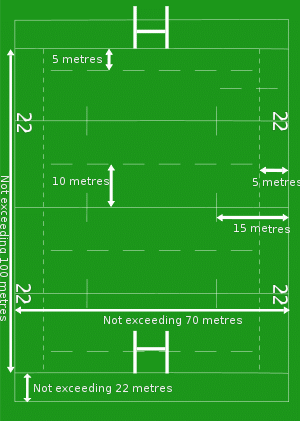
As I mentioned earlier, rugby is an 80 minute game. And what compounds the strenuous nature of the sport is the limited number of substitutes–a maximum of 7– that each team is allowed in a single game. There are no line shifts; the offensive line is the defensive line. Rugby players must be committed to playing all 80 minutes and dig deep to finish the game.
As fathers we need to have that same commitment. Quitting is not an option. Yes, single mothers have been successfully raising children for years, but just imagine how those situations would have been improved with a father who was committed to the job. Our children need us to be there for the whole game.
Rugby has been the most rewarding sport I have ever played but being a father has been the most rewarding thing I have ever done in my life. What I learned from rugby has made me a better father: being a leader and a team player, being firm and recovering quickly from failure, and most of all, being committed to the end.
Gracias a Roy Harley <rharley@hotmail.com> / Diego Martinez dmpdmp1@gmail.com

Pool Jump

- Watch MoreFunny Videos

Beyoncé - Party ft. J. Cole

Oliver Shanti ~Sacral Nirvana~ #chillout

Kina Grannis - Message From Your Heart

Axwell feat. Errol Reid - Nothing But Love


¿qué provecho obtendrá un hombre si gana el mundo entero, pero pierde su alma? O ¿qué dará un hombre a cambio de su alma? 27 "Porque el Hijo del Hombre ha de venir en la gloria de Su Padre con Sus ángeles, y ENTONCES RECOMPENSARA A CADA UNO SEGUN SU CONDUCTA. Mateo 16-26

26

Tarzan and the Leopard Woman

Sara Bareilles - Oh Darling (Live from Abbey Road)

Enzo Siffredi & Jfth feat. The Allstars - Jungle Dancing (Official Video...

Podemos existir sin alma

"

, mientras cerebro y corazon funcionen.Pero no tendremos mas sentido, no tendremos mas recuerdos, no tendremos nada. Y ya no tendremos mas chance de recuperarla . Solo de existir, como una caparazon vacia" Remus John Lupin - Casa Gryffindor - [Harry Potter y el prisionero de Azkaban]
"Está sangrando sangre" Ruben Dario Da Rosa (1961). Telefuturo - #Olimpia - Cerro Porteño 2º Tiempo 0-0 #futbol #paraguay

Vida Loca - alejandro sanz y pancho cespedes (vivo)

DES UNION EUROPEA Europa vuelve por oportunidades de trabajo a Sudamerica .La XENOFOBIA EUROPEA quedo atras . Perdonemos el pasado otra vez. (***)


Europa vuelve por oportunidades de trabajo a Sudamerica .
La XENOFOBIA EUROPEA quedo atras . Perdonemos el pasado otra vez.(***)


—Mr. Ferguson is a professor of history at Harvard University and the author of "Civilization: The West and the Rest," published this month by Penguin Press.


Welcome to Europe, 2021. Ten years have elapsed since the great crisis of 2010-11, which claimed the scalps of no fewer than 10 governments, including Spain and France. Some things have stayed the same, but a lot has changed.

The euro is still circulating, though banknotes are now seldom seen. (Indeed, the ease of electronic payments now makes some people wonder why creating a single European currency ever seemed worth the effort.) But Brussels has been abandoned as Europe's political headquarters. Vienna has been a great success.

"There is something about the Habsburg legacy," explains the dynamic new Austrian Chancellor Marsha Radetzky. "It just seems to make multinational politics so much more fun."

The Germans also like the new arrangements. "For some reason, we never felt very welcome in Belgium," recalls German Chancellor Reinhold Siegfried von Gotha-Dämmerung.

Life is still far from easy in the peripheral states of the United States of Europe (as the euro zone is now known). Unemployment in Greece, Italy, Portugal and Spain has soared to 20%. But the creation of a new system of fiscal federalism in 2012 has ensured a steady stream of funds from the north European core.

Like East Germans before them, South Europeans have grown accustomed to this trade-off. With a fifth of their region's population over 65 and a fifth unemployed, people have time to enjoy the good things in life. And there are plenty of euros to be made in this gray economy, working as maids or gardeners for the Germans, all of whom now have their second homes in the sunny south.

The U.S.E. has actually gained some members. Lithuania and Latvia stuck to their plan of joining the euro, following the example of their neighbor Estonia. Poland, under the dynamic leadership of former Foreign Minister Radek Sikorski, did the same. These new countries are the poster children of the new Europe, attracting German investment with their flat taxes and relatively low wages.

But other countries have left.

David Cameron—now beginning his fourth term as British prime minister—thanks his lucky stars that, reluctantly yielding to pressure from the Euroskeptics in his own party, he decided to risk a referendum on EU membership. His Liberal Democrat coalition partners committed political suicide by joining Labour's disastrous "Yeah to Europe" campaign.

Egged on by the pugnacious London tabloids, the public voted to leave by a margin of 59% to 41%, and then handed the Tories an absolute majority in the House of Commons. Freed from the red tape of Brussels, England is now the favored destination of Chinese foreign direct investment in Europe. And rich Chinese love their Chelsea apartments, not to mention their splendid Scottish shooting estates.

In some ways this federal Europe would gladden the hearts of the founding fathers of European integration. At its heart is the Franco-German partnership launched by Jean Monnet and Robert Schuman in the 1950s. But the U.S.E. of 2021 is a very different thing from the European Union that fell apart in 2011.

* * *
It was fitting that the disintegration of the EU should be centered on the two great cradles of Western civilization, Athens and Rome. But George Papandreou and Silvio Berlusconi were by no means the first European leaders to fall victim to what might be called the curse of the euro.

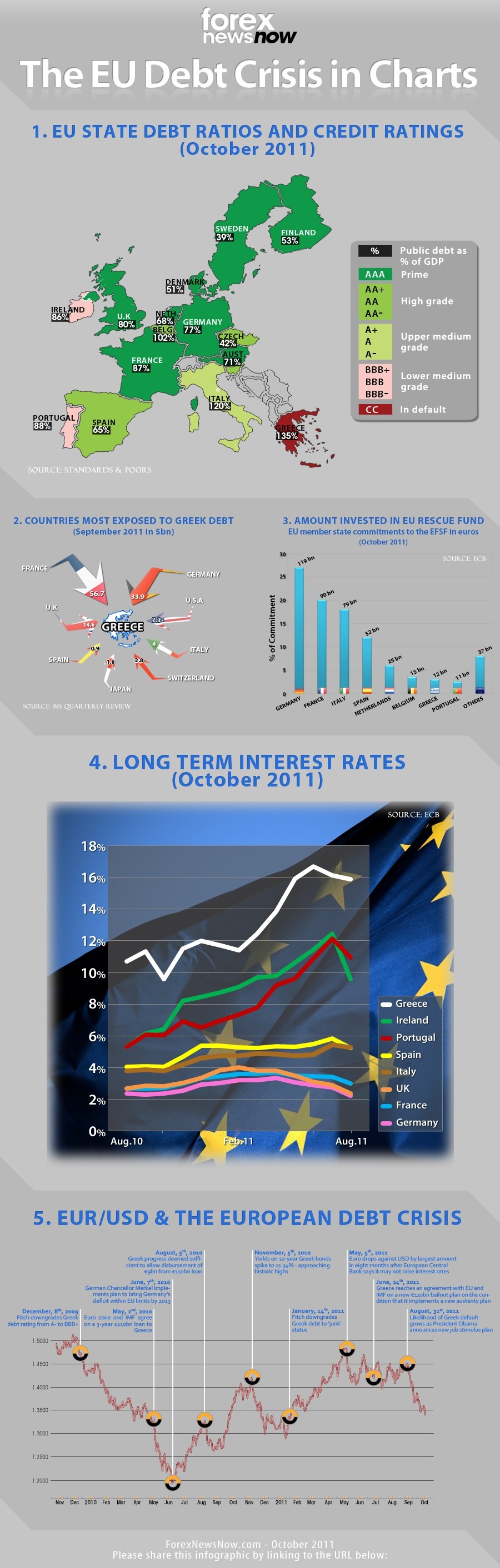
Since financial fear had started to spread through the euro zone in June 2010, no fewer than seven other governments had fallen: in the Netherlands, Slovakia, Belgium, Ireland, Finland, Portugal and Slovenia. The fact that nine governments fell in less than 18 months—with another soon to follow—was in itself remarkable.

But not only had the euro become a government-killing machine. It was also fostering a new generation of populist movements, like the Dutch Party for Freedom and the True Finns. Belgium was on the verge of splitting in two. The very structures of European politics were breaking down.

Who would be next? The answer was obvious. After the election of Nov. 20, 2011, the Spanish prime minister, José Luis Rodríguez Zapatero, stepped down. His defeat was such a foregone conclusion that he had decided the previous April not to bother seeking re-election.

And after him? The next leader in the crosshairs was the French president, Nicolas Sarkozy, who was up for re-election the following April.

The question on everyone's minds back in November 2011 was whether Europe's monetary union—so painstakingly created in the 1990s—was about to collapse. Many pundits thought so. Indeed, New York University's influential Nouriel Roubini argued that not only Greece but also Italy would have to leave—or be kicked out of—the euro zone.

But if that had happened, it is hard to see how the single currency could have survived. The speculators would immediately have turned their attention to the banks in the next weakest link (probably Spain). Meanwhile, the departing countries would have found themselves even worse off than before. Overnight all of their banks and half of their nonfinancial corporations would have been rendered insolvent, with euro-denominated liabilities but drachma or lira assets.

Restoring the old currencies also would have been ruinously expensive at a time of already chronic deficits. New borrowing would have been impossible to finance other than by printing money. These countries would quickly have found themselves in an inflationary tailspin that would have negated any benefits of devaluation.

For all these reasons, I never seriously expected the euro zone to break up. To my mind, it seemed much more likely that the currency would survive—but that the European Union would disintegrate. After all, there was no legal mechanism for a country like Greece to leave the monetary union. But under the Lisbon Treaty's special article 50, a member state could leave the EU. And that is precisely what the British did.

* * *
Britain got lucky. Accidentally, because of a personal feud between Tony Blair and Gordon Brown, the United Kingdom didn't join the euro zone after Labour came to power in 1997. As a result, the U.K. was spared what would have been an economic calamity when the financial crisis struck.

With a fiscal position little better than most of the Mediterranean countries' and a far larger banking system than in any other European economy, Britain with the euro would have been Ireland to the power of eight. Instead, the Bank of England was able to pursue an aggressively expansionary policy. Zero rates, quantitative easing and devaluation greatly mitigated the pain and allowed the "Iron Chancellor" George Osborne to get ahead of the bond markets with pre-emptive austerity. A better advertisement for the benefits of national autonomy would have been hard to devise.

At the beginning of David Cameron's premiership in 2010, there had been fears that the United Kingdom might break up. But the financial crisis put the Scots off independence; small countries had fared abysmally. And in 2013, in a historical twist only a few die-hard Ulster Unionists had dreamt possible, the Republic of Ireland's voters opted to exchange the austerity of the U.S.E. for the prosperity of the U.K. Postsectarian Irishmen celebrated their citizenship in a Reunited Kingdom of Great Britain and Ireland with the slogan: "Better Brits Than Brussels."

Another thing no one had anticipated in 2011 was developments in Scandinavia. Inspired by the True Finns in Helsinki, the Swedes and Danes—who had never joined the euro—refused to accept the German proposal for a "transfer union" to bail out Southern Europe. When the energy-rich Norwegians suggested a five-country Norse League, bringing in Iceland, too, the proposal struck a chord.

The new arrangements are not especially popular in Germany, admittedly. But unlike in other countries, from the Netherlands to Hungary, any kind of populist politics continues to be verboten in Germany. The attempt to launch a "True Germans" party (Die wahren Deutschen) fizzled out amid the usual charges of neo-Nazism.

The defeat of Angela Merkel's coalition in 2013 came as no surprise following the German banking crisis of the previous year. Taxpayers were up in arms about Ms. Merkel's decision to bail out Deutsche Bank, despite the fact that Deutsche's loans to the ill-fated European Financial Stability Fund had been made at her government's behest. The German public was simply fed up with bailing out bankers. "Occupy Frankfurt" won.

Yet the opposition Social Democrats essentially pursued the same policies as before, only with more pro-European conviction. It was the SPD that pushed through the treaty revision that created the European Finance Funding Office (fondly referred to in the British press as "EffOff"), effectively a European Treasury Department to be based in Vienna.

It was the SPD that positively welcomed the departure of the awkward Brits and Scandinavians, persuading the remaining 21 countries to join Germany in a new federal United States of Europe under the Treaty of Potsdam in 2014. With the accession of the six remaining former Yugoslav states—Bosnia, Croatia, Kosovo, Macedonia, Montenegro and Serbia—total membership in the U.S.E. rose to 28, one more than in the precrisis EU. With the separation of Flanders and Wallonia, the total rose to 29.

Crucially, too, it was the SPD that whitewashed the actions of Mario Draghi, the Italian banker who had become president of the European Central Bank in early November 2011. Mr. Draghi went far beyond his mandate in the massive indirect buying of Italian and Spanish bonds that so dramatically ended the bond-market crisis just weeks after he took office. In effect, he turned the ECB into a lender of last resort for governments.

But Mr. Draghi's brand of quantitative easing had the great merit of working. Expanding the ECB balance sheet put a floor under asset prices and restored confidence in the entire European financial system, much as had happened in the U.S. in 2009. As Mr. Draghi said in an interview in December 2011, "The euro could only be saved by printing it."

So the European monetary union did not fall apart, despite the dire predictions of the pundits in late 2011. On the contrary, in 2021 the euro is being used by more countries than before the crisis.

As accession talks begin with Ukraine, German officials talk excitedly about a future Treaty of Yalta, dividing Eastern Europe anew into Russian and European spheres of influence. One source close to Chancellor Gotha-Dämmerung joked last week: "We don't mind the Russians having the pipelines, so long as we get to keep the Black Sea beaches."

***
On reflection, it was perhaps just as well that the euro was saved. A complete disintegration of the euro zone, with all the monetary chaos that it would have entailed, might have had some nasty unintended consequences. It was easy to forget, amid the febrile machinations that ousted Messrs. Papandreou and Berlusconi, that even more dramatic events were unfolding on the other side of the Mediterranean.

Back then, in 2011, there were still those who believed that North Africa and the Middle East were entering a bright new era of democracy. But from the vantage point of 2021, such optimism seems almost incomprehensible.

The events of 2012 shook not just Europe but the whole world. The Israeli attack on Iran's nuclear facilities threw a lit match into the powder keg of the "Arab Spring." Iran counterattacked through its allies in Gaza and Lebanon.

Having failed to veto the Israeli action, the U.S. once again sat in the back seat, offering minimal assistance and trying vainly to keep the Straits of Hormuz open without firing a shot in anger. (When the entire crew of an American battleship was captured and held hostage by Iran's Revolutionary Guards, President Obama's slim chance of re-election evaporated.)

Turkey seized the moment to take the Iranian side, while at the same time repudiating Atatürk's separation of the Turkish state from Islam. Emboldened by election victory, the Muslim Brotherhood seized the reins of power in Egypt, repudiating its country's peace treaty with Israel. The king of Jordan had little option but to follow suit. The Saudis seethed but could hardly be seen to back Israel, devoutly though they wished to avoid a nuclear Iran.

Israel was entirely isolated. The U.S. was otherwise engaged as President Mitt Romney focused on his Bain Capital-style "restructuring" of the federal government's balance sheet.

It was in the nick of time that the United States of Europe intervened to prevent the scenario that Germans in particular dreaded: a desperate Israeli resort to nuclear arms. Speaking from the U.S.E. Foreign Ministry's handsome new headquarters in the Ringstrasse, the European President Karl von Habsburg explained on Al Jazeera: "First, we were worried about the effect of another oil price hike on our beloved euro. But above all we were afraid of having radioactive fallout on our favorite resorts."

Looking back on the previous 10 years, Mr. von Habsburg—still known to close associates by his royal title of Archduke Karl of Austria—could justly feel proud. Not only had the euro survived. Somehow, just a century after his grandfather's deposition, the Habsburg Empire had reconstituted itself as the United States of Europe.

Small wonder the British and the Scandinavians preferred to call it the Wholly German Empire.


(***) "Perdonemos el pasado pero mantengamos la lista negra actualizada"

Cuenta Regresiva a Navidad


"Pueden prometerse acciones, pero no sentimientos, porque éstos son involuntarios. Quien promete a otro amarlo siempre u odiarlo siempre o serle siempre fiel, promete algo que no está en su mano poder cumplir" Friedrich Nietzsche (1844 – 1900)

Schiller feat. September - Breathe

5 - The story of science: What is the secret of life? - ¿Cuál es el secr...